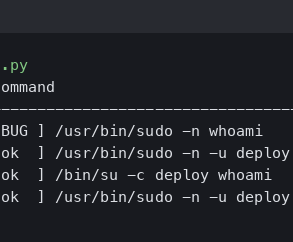
Python DevOps tools and backend deployment scripts are plagued by a painfully common sight—you open the codebase only to find code that looks like this.
We’ve all been there. You hire a freelance developer to patch a legacy PHP app, or an external data scientist needs to upload CSVs to your server.
Fifteen years ago, I completely nuked a production server. I was trying to recursively delete a temporary directory, but because I didn't fully understand.
So there I was, staring at my terminal at 2:15 AM last Thursday. Our main database replica on a heavily loaded Ubuntu 24.04 LTS box had just flatlined.
Ubuntu Tutorial: So there I was last Tuesday, staring at a blank screen. A client specifically requested Joomla for their new e-commerce hybrid project.

This ad is set to only appear on mobile devices
Read More
Actually, I should clarify - I spent forty-five minutes yesterday trying to find a specific Kubernetes ingress annotation I wrote down in our internal.
Actually, I should clarify - I woke up last Tuesday to a Slack channel that looked like a crime scene. Our staging clusters were throwing 503s, the.
Actually, I should clarify — I stopped trusting cloud dashboards about three years ago. You know the drill: you click "Deploy," the little spinner spins.
Actually, I should clarify—I have a love-hate relationship with ERP systems. They save businesses, sure, but setting them up usually involves sacrificing.
Actually, I should clarify — I finally snapped last Tuesday. After the third time a Snap update silently broke my Nextcloud permissions on my "stable".
I've spent the better part of the last five years lying to myself. We told ourselves that running cloud gaming services through a Chromium browser was.